Peptide library
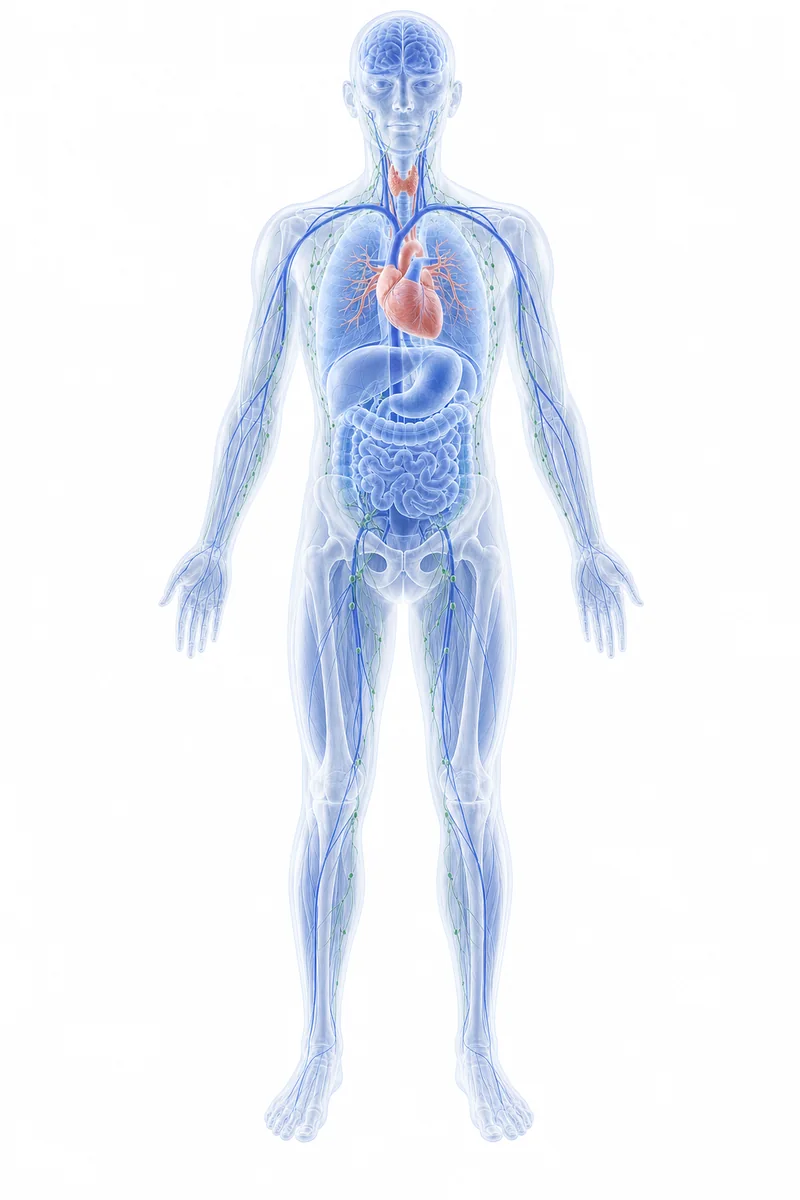
This library lists research peptides and approved peptide medicines by the body system they are studied in. Each entry gives the compound's class, its regulatory status and a short summary of what has been studied, and in what. The distinction this site draws everywhere applies here too: a summary says whether the work is in cells, in animals or in people, and an approved status refers to a specific indication, not to every use claimed for a compound. Statuses are checked against regulatory and trial records and dated. Where Peptides Facts has an article on a compound, its entry links to it. Use the body map or the filters to narrow the list, or search by name, alias or drug class.
Status key
- Approved medicine 84
- Approved by the FDA and/or the EMA for at least one medical use.
- In clinical trials 28
- Tested in human clinical trials, but not approved by a major regulator.
- Research compound 25
- Preclinical or experimental. Not approved for human use anywhere major.
- Cosmetic ingredient 17
- Used as an ingredient in topical cosmetics rather than as a medicine.
154 peptides
Brain & sleep
Peptides studied for effects on neurons, neurotransmission, pain signalling, sleep regulation and neurodevelopmental disorders.
Cerebrolysin
In clinical trialsAlso known as FPF-1070
Porcine brain-derived peptide mixture · peptide mixture
Mixture of low-molecular-weight peptides and amino acids prepared from pig brain. Investigated in clinical trials after stroke, brain injury and in dementia, with mixed results.
Status: Licensed in some countries; not FDA- or EMA-approved; trials ongoing
Sources: clinicaltrials.gov (1), clinicaltrials.gov (2)
Davunetide
In clinical trialsAlso known as NAP, AL-108, NAPVSIPQ
Neuroprotective octapeptide derived from ADNP · 8 aa
Eight-residue fragment (NAPVSIPQ) of activity-dependent neuroprotective protein. Investigated in tauopathy and cognitive-impairment trials, without a positive pivotal result.
Status: Phase 2/3 in progressive supranuclear palsy completed; not approved
Sources: clinicaltrials.gov (1), clinicaltrials.gov (2)
Dihexa
Research compoundAlso known as PNB-0408, N-hexanoic-Tyr-Ile-(6)-aminohexanoic amide
Angiotensin IV-derived peptidomimetic · modified 3-residue peptide
Small modified peptide from Washington State University, derived from angiotensin IV. Studied in rodent models of memory impairment for proposed HGF/c-Met activity.
Status: Preclinical only; not approved for any use
Our article: Dihexa: The HGF/c-Met Claim and the Distance Between a Rodent Model and a Person
Sources: pubmed.ncbi.nlm.nih.gov (1), pubmed.ncbi.nlm.nih.gov (2)
DSIP
Research compoundAlso known as Delta sleep-inducing peptide, Emideltide
Neuropeptide (nonapeptide) · 9 aa
Nine-residue peptide isolated in 1977 from rabbits in induced sleep. Sleep studies since then have given inconsistent results, and no receptor or gene has been confirmed.
Status: Not approved anywhere; receptor and gene still unidentified
Our article: DSIP: A 1977 Discovery With a Thin and Contradictory Evidence Record
Sources: pubmed.ncbi.nlm.nih.gov (1), pubmed.ncbi.nlm.nih.gov (2)
Epitalon
Research compoundAlso known as Epithalon, Epithalone, AEDG peptide
Synthetic tetrapeptide (Ala-Glu-Asp-Gly) · 4 aa
Tetrapeptide modelled on epithalamin, a pineal gland extract. Studied in cells and rodents for telomerase activity and ageing, mostly by one St Petersburg group.
Status: Not approved by FDA or EMA; evidence mostly from one research group
Also listed under Skin & aging
Our article: Epitalon and Telomerase: An Assessment of the Evidence Base
Sources: pubmed.ncbi.nlm.nih.gov (1), pubmed.ncbi.nlm.nih.gov (2)
NNZ-2591
In clinical trialsAlso known as cyclo-glycyl-2-allylproline
Synthetic cyclic dipeptide (cyclic glycine-proline analogue) · cyclic dipeptide
Analogue of cyclic glycine-proline, a metabolite of IGF-1. Under clinical investigation in rare neurodevelopmental disorders, including Phelan-McDermid and Pitt Hopkins syndromes.
Status: Phase 3 in Phelan-McDermid syndrome (Neuren), 2025–2026
Sources: clinicaltrials.gov (1), clinicaltrials.gov (2)
Selank
Research compoundAlso known as TP-7, TKPRPGP
Synthetic tuftsin analogue (heptapeptide) · 7 aa
Tuftsin (TKPR) extended with Pro-Gly-Pro for stability. Studied in rodent anxiety and stress models and in cell work on GABA-related gene expression.
Status: Registered as a medicine in Russia; not approved by FDA or EMA
Also listed under Immune & defense
Our article: Selank: Proposed Anxiolytic Mechanism and the State of the Evidence
Sources: pubmed.ncbi.nlm.nih.gov (1), pubmed.ncbi.nlm.nih.gov (2)
Semax
Research compoundAlso known as ACTH(4–7)-Pro-Gly-Pro, MEHFPGP
Synthetic ACTH(4–7) analogue with a Pro-Gly-Pro tail · 7 aa
Heptapeptide developed in Moscow from a fragment of ACTH. Studied mainly in Russian literature, in rodent stroke models, BDNF expression and cognition.
Status: Registered as a medicine in Russia; not approved by FDA or EMA
Our article: Semax: An ACTH(4–7) Fragment, BDNF, and What the Russian Literature Does and Does Not Show
Sources: pubmed.ncbi.nlm.nih.gov (1), pubmed.ncbi.nlm.nih.gov (2)
Trofinetide
Approved medicineAlso known as NNZ-2566, Daybue
Synthetic analogue of the tripeptide GPE (IGF-1 fragment) · 3 aa (modified)
Modified version of glycine-proline-glutamate, a fragment cleaved from IGF-1. Approved for the treatment of Rett syndrome in adults and children aged 2 and over.
Status: Approved as Daybue (FDA 2023) and Daybu (EMA 2026)
Sources: accessdata.fda.gov, ema.europa.eu
Ziconotide
Approved medicineAlso known as ω-conotoxin MVIIA, SNX-111, Prialt
Synthetic cone-snail ω-conotoxin (N-type calcium channel blocker) · 25 aa
Synthetic copy of a peptide from the venom of the marine snail Conus magus. Approved for severe chronic pain when other treatments are unsuitable.
Status: Approved as Prialt (FDA 2004; EMA 2005)
Sources: accessdata.fda.gov, ema.europa.eu
Skin & aging
Peptides researched in pigmentation, wound and skin-infection models, cosmetic science and cellular ageing.
Acetyl hexapeptide-8
Cosmetic ingredientAlso known as Argireline, Acetyl hexapeptide-3
Synthetic SNAP-25-derived hexapeptide · 6 aa
Acetylated six-residue fragment of the SNAP-25 protein, sold as Argireline. Studied in vitro for interference with SNARE complex assembly; used in anti-wrinkle cosmetics.
Status: Cosmetic ingredient (INCI); not a medicine
Sources: pubmed.ncbi.nlm.nih.gov (1), pubmed.ncbi.nlm.nih.gov (2)
Acetyl octapeptide-3
Cosmetic ingredientAlso known as SNAP-8
Synthetic SNAP-25-derived octapeptide · 8 aa
Eight-residue extension of the Argireline sequence, marketed as SNAP-8. Designed to mimic the N-terminus of SNAP-25; included in anti-wrinkle cosmetic formulations.
Status: Cosmetic ingredient (INCI); not a medicine
Source: pubmed.ncbi.nlm.nih.gov
Acetyl tetrapeptide-5
Cosmetic ingredientAlso known as Eyeseryl
Synthetic acetylated tetrapeptide · 4 aa
Short acetylated peptide sold as Eyeseryl for under-eye products. In vitro data concern glycation and fluid accumulation; independent clinical evidence is sparse.
Status: Cosmetic ingredient (INCI); not a medicine
Source: pubmed.ncbi.nlm.nih.gov
Afamelanotide
Approved medicineAlso known as Melanotan I, MT-I, [Nle4,D-Phe7]-α-MSH, CUV1647, Scenesse
α-MSH analogue (melanocortin-1 receptor agonist) · 13 aa
Linear α-MSH analogue originally called Melanotan I. Approved to increase pain-free light exposure in adults with erythropoietic protoporphyria (EPP).
Status: Approved as Scenesse (EMA 2014; FDA 2019)
Our article: Afamelanotide: MC1R Agonism and Two Phase 3 Trials
Sources: ema.europa.eu, accessdata.fda.gov
Bacitracin
Approved medicineAlso known as Bacitracin A
Cyclic polypeptide antibiotic · 12 residues (cyclic)
Mixture of cyclic peptides from Bacillus licheniformis that blocks bacterial cell-wall synthesis. An approved antibiotic, today found mostly in first-aid preparations.
Status: FDA-approved since 1948 (Baciguent and generics)
Also listed under Immune & defense
Source: accessdata.fda.gov
Carnosine
Cosmetic ingredientAlso known as L-carnosine, β-alanyl-L-histidine
Endogenous dipeptide (β-alanyl-L-histidine) · 2 aa
Dipeptide abundant in skeletal muscle and brain. Studied for pH buffering, metal binding and anti-glycation activity; also used as an antioxidant in cosmetic formulations.
Status: Cosmetic and food-supplement ingredient; not an approved medicine
Also listed under Bones & muscles
Sources: pubmed.ncbi.nlm.nih.gov (1), pubmed.ncbi.nlm.nih.gov (2)
Difelikefalin
Approved medicineAlso known as CR845, Korsuva, Kapruvia
Peripheral kappa-opioid receptor agonist (D-amino-acid peptide) · 4 aa (D-amino acids)
Peptide of four D-amino acids designed to stay largely outside the central nervous system. Approved for moderate-to-severe itch of chronic kidney disease in haemodialysis.
Status: Approved as Korsuva (FDA 2021) and Kapruvia (EMA 2022)
Sources: accessdata.fda.gov, ema.europa.eu
Dipeptide diaminobutyroyl benzylamide diacetate
Cosmetic ingredientAlso known as Syn-Ake, Snake-venom-mimetic peptide
Synthetic dipeptide derivative (waglerin-1 mimetic) · dipeptide derivative
Small molecule modelled on waglerin-1, a temple-viper venom peptide, sold as Syn-Ake. Reported in vitro to act on muscle nicotinic receptors; used in cosmetics.
Status: Cosmetic ingredient (INCI); not a medicine
Source: pubmed.ncbi.nlm.nih.gov
Ecallantide
Approved medicineAlso known as DX-88, Kalbitor
Recombinant plasma kallikrein inhibitor (Kunitz-domain protein) · 60 aa
60-residue protein selected by phage display to block plasma kallikrein and bradykinin release. Approved for acute attacks of hereditary angioedema.
Status: Approved as Kalbitor (FDA 2009)
Also listed under Immune & defense
Source: accessdata.fda.gov
GHK-Cu
Cosmetic ingredientAlso known as Copper tripeptide-1, Copper peptide, Glycyl-L-histidyl-L-lysine copper, Prezatide copper
Copper-binding tripeptide (Gly-His-Lys) · 3 aa + copper
Naturally occurring tripeptide, first found in human plasma, that binds copper(II). Studied in wound-healing models and cell gene-expression work; widely used in skincare.
Status: Listed cosmetic ingredient (copper tripeptide-1); not a medicine
Our article: GHK-Cu: How a Three-Residue Peptide Carries Copper, and What That Explains
Sources: pubmed.ncbi.nlm.nih.gov (1), pubmed.ncbi.nlm.nih.gov (2)
Glutathione
Cosmetic ingredientAlso known as GSH, γ-L-glutamyl-L-cysteinylglycine, L-glutathione
Endogenous antioxidant tripeptide (γ-Glu-Cys-Gly) · 3 aa
The main thiol antioxidant inside human cells. Reviewed for effects on melanin synthesis in small skin-lightening studies, where evidence remains limited and inconsistent.
Status: Cosmetic and supplement ingredient; not an approved skin medicine
Also listed under Immune & defense
Sources: pubmed.ncbi.nlm.nih.gov (1), pubmed.ncbi.nlm.nih.gov (2)
Hexapeptide-9
Cosmetic ingredientAlso known as Collaxyl
Synthetic collagen-derived hexapeptide · 6 aa
Repeated Gly-Pro-Gln motif from collagen, sold as Collaxyl. Studied in skin-cell cultures for extracellular-matrix gene expression and in small cosmetic trials.
Status: Cosmetic ingredient (INCI); not a medicine
Source: pubmed.ncbi.nlm.nih.gov
Icatibant
Approved medicineAlso known as HOE 140, Firazyr
Bradykinin B2 receptor antagonist (decapeptide) · 10 aa
Synthetic decapeptide with five non-natural residues that blocks the bradykinin B2 receptor. Approved for acute attacks of hereditary angioedema.
Status: Approved as Firazyr (EMA 2008; FDA 2011)
Also listed under Immune & defense
Sources: ema.europa.eu, accessdata.fda.gov
LTX-315
In clinical trialsAlso known as Ruxotemitide
Oncolytic cationic peptide · 9 aa
Nine-residue membrane-disrupting peptide derived from lactoferricin. Investigated in early-phase cancer trials alongside checkpoint inhibitors and cell therapy.
Status: Phase 2 in melanoma and sarcoma (Lytix Biopharma); not approved
Also listed under Immune & defense
Sources: clinicaltrials.gov (1), clinicaltrials.gov (2)
Melanotan II
Research compoundAlso known as MT-II, MT-2
Cyclic α-MSH analogue (non-selective melanocortin agonist) · 7 aa (cyclic)
Cyclic analogue made at the University of Arizona in the 1990s that acts on several melanocortin receptors. Case reports describe adverse events with unlicensed use.
Status: Never approved; regulators have issued safety warnings
Also listed under Sexual & reproductive
Our article: Melanotan II: The Documented Safety Signals
Sources: pubmed.ncbi.nlm.nih.gov (1), pubmed.ncbi.nlm.nih.gov (2)
Nonapeptide-1
Cosmetic ingredientAlso known as Melanostatine-5
Synthetic α-MSH-antagonist nonapeptide · 9 aa
Nine-residue peptide sold as Melanostatine-5, designed to compete with α-MSH at the MC1 receptor. Studied in melanocyte cultures; used in brightening cosmetics.
Status: Cosmetic ingredient (INCI); not a medicine
Source: pubmed.ncbi.nlm.nih.gov
Palmitoyl hexapeptide-12
Cosmetic ingredientAlso known as Pal-VGVAPG, Biopeptide EL
Palmitoylated elastin-derived hexapeptide (Pal-VGVAPG) · 6 aa + palmitoyl
VGVAPG is a repeating elastin sequence that acts as a matrikine in cell studies. The palmitoylated form is used in cosmetics marketed for skin firmness.
Status: Cosmetic ingredient (INCI); not a medicine
Source: pubmed.ncbi.nlm.nih.gov
Palmitoyl pentapeptide-4
Cosmetic ingredientAlso known as Matrixyl, Pal-KTTKS, Palmitoyl pentapeptide-3
Palmitoylated collagen-fragment pentapeptide (Pal-KTTKS) · 5 aa + palmitoyl
KTTKS, a sequence from type I procollagen, linked to palmitic acid to aid skin penetration. Studied in fibroblast cultures and small cosmetic trials on photoaged skin.
Status: Cosmetic ingredient (INCI); not a medicine
Source: pubmed.ncbi.nlm.nih.gov
Palmitoyl tetrapeptide-7
Cosmetic ingredientAlso known as Pal-GQPR, Palmitoyl tetrapeptide-3
Palmitoylated tetrapeptide (Pal-GQPR) · 4 aa + palmitoyl
Fragment related to immunoglobulin G, combined with palmitoyl tripeptide-1 in Matrixyl 3000. Supplier data concern interleukin-6 release in cultured skin cells.
Status: Cosmetic ingredient (INCI); not a medicine
Source: pubmed.ncbi.nlm.nih.gov
Palmitoyl tripeptide-1
Cosmetic ingredientAlso known as Pal-GHK, Palmitoyl oligopeptide
Palmitoylated GHK tripeptide · 3 aa + palmitoyl
GHK linked to palmitic acid, without copper, to increase lipophilicity. A component of Matrixyl 3000; studied as a collagen-signalling matrikine in fibroblast cultures.
Status: Cosmetic ingredient (INCI); not a medicine
Sources: pubmed.ncbi.nlm.nih.gov (1), pubmed.ncbi.nlm.nih.gov (2)
Palmitoyl tripeptide-38
Cosmetic ingredientAlso known as Matrixyl synthe'6
Palmitoylated modified tripeptide (Pal-KMO2K) · 3 aa + palmitoyl
Lys-Met(O2)-Lys sequence with an oxidised methionine, sold as Matrixyl synthe'6. Supplier studies examine matrix-protein synthesis; found in multi-ingredient creams.
Status: Cosmetic ingredient (INCI); not a medicine
Source: pubmed.ncbi.nlm.nih.gov
Pentapeptide-18
Cosmetic ingredientAlso known as Leuphasyl
Synthetic enkephalin-like pentapeptide · 5 aa
Peptide modelled on enkephalins and sold as Leuphasyl. Proposed to reduce neuronal excitability in cell assays; often paired with acetyl hexapeptide-8 in cosmetics.
Status: Cosmetic ingredient (INCI); not a medicine
Source: pubmed.ncbi.nlm.nih.gov
sh-Oligopeptide-1
Cosmetic ingredientAlso known as Oligopeptide-1, Epidermal growth factor (EGF), rh-EGF
Recombinant human epidermal growth factor (53 aa) · 53 aa
INCI name for recombinant human EGF used in skincare. EGF is studied in wound repair; cosmetic research focuses on formulation stability and skin delivery.
Status: Cosmetic ingredient (INCI); not a medicine
Sources: pubmed.ncbi.nlm.nih.gov (1), pubmed.ncbi.nlm.nih.gov (2)
Tripeptide-10 citrulline
Cosmetic ingredientAlso known as Decorinyl
Synthetic decorin-mimetic tetrapeptide · 4 residues
Lys-Asp-Ile-citrulline sequence sold as Decorinyl, modelled on decorin's collagen-binding site. Studied in vitro for the organisation of collagen fibrils.
Status: Cosmetic ingredient (INCI); not a medicine
Sources: pubmed.ncbi.nlm.nih.gov (1), pubmed.ncbi.nlm.nih.gov (2)
Digestive & weight
Peptides studied in appetite and incretin signalling, gut motility and absorption, liver fat and gastrointestinal tumours.
Amycretin
In clinical trialsAlso known as NN9487, NNC0487-0111
Unimolecular GLP-1 and amylin receptor agonist · unimolecular peptide
Single peptide designed to activate both GLP-1 and amylin receptors, studied in two formulations. Phase 3 trials in obesity and related conditions began in 2026.
Status: Phase 3 (AMAZE programme, Novo Nordisk), started 2026
Also listed under Hormones & metabolism
Our article: Amycretin: One Molecule, Two Receptor Families
Sources: clinicaltrials.gov (1), clinicaltrials.gov (2)
AOD9604
Research compoundAlso known as AOD-9604, Tyr-hGH(177–191), Advanced Obesity Drug 9604
Modified hGH fragment (176–191 analogue) · 16 aa
16-residue peptide based on the C-terminal region of growth hormone. Studied for fat metabolism in obese mice; later human trials did not show meaningful weight loss.
Status: Obesity programme discontinued after human trials; not approved as a medicine
Also listed under Hormones & metabolism
Our article: AOD9604: A Compound That Worked in Mice and Failed in People
Source: pubmed.ncbi.nlm.nih.gov
Apraglutide
In clinical trialsAlso known as FE 203799
Long-acting GLP-2 analogue · 33 aa
GLP-2 analogue with modifications that slow clearance. Evaluated in the Phase 3 STARS trial in short bowel syndrome with intestinal failure; a further Phase 3 began in 2026.
Status: Phase 3 in short bowel syndrome (VectivBio/Ironwood); not approved
Sources: clinicaltrials.gov (1), clinicaltrials.gov (2)
BPC-157
Research compoundAlso known as Body Protection Compound 157, PL 14736, Bepecin
Synthetic gastric pentadecapeptide · 15 aa
15-residue sequence derived from a protein in human gastric juice. Studied mainly in rodent models of gut, tendon and muscle injury, with most papers from one research group.
Status: Not approved anywhere; human data limited to small early studies
Also listed under Bones & muscles
Our article: BPC-157: What the Evidence Says About Its Mechanism of Action
Sources: pubmed.ncbi.nlm.nih.gov (1), pubmed.ncbi.nlm.nih.gov (2)
Cagrilintide
In clinical trialsAlso known as NN9838, AM833
Long-acting amylin analogue · 37 aa
Acylated analogue of amylin, a hormone co-secreted with insulin, acting on amylin and calcitonin receptors. In Phase 3 trials for obesity, alone and as part of CagriSema.
Status: Phase 3 alone and with semaglutide (Novo Nordisk); not approved
Our article: Amylin Receptor Agonists: Cagrilintide and a Second Satiety Pathway
Sources: clinicaltrials.gov (1), clinicaltrials.gov (2)
CagriSema
In clinical trialsAlso known as Cagrilintide/semaglutide, NN9838 + NN9535
Fixed combination of an amylin analogue and a GLP-1 agonist · two-peptide combination
Co-formulation of cagrilintide and semaglutide. Phase 3 REDEFINE trials compare it with each component and with placebo in obesity and in type 2 diabetes.
Status: Phase 3 (REDEFINE, Novo Nordisk); not approved as of Oct 2026
Also listed under Hormones & metabolism
Our article: CagriSema and REDEFINE: What Adding Amylin Agonism Bought Over Semaglutide Alone
Sources: clinicaltrials.gov (1), clinicaltrials.gov (2)
Gallium Ga-68 dotatate
Approved medicineAlso known as 68Ga-DOTATATE, NETSPOT
Radiolabelled somatostatin analogue (PET imaging agent) · 8 aa + chelator
Octreotate peptide carrying a DOTA chelator loaded with gallium-68. Approved for PET imaging to locate somatostatin receptor-positive neuroendocrine tumours.
Status: Approved as NETSPOT (FDA 2016)
Source: accessdata.fda.gov
Glepaglutide
In clinical trialsAlso known as ZP1848, Zeydovio
Long-acting GLP-2 analogue · 39 aa
GLP-2 analogue from Zealand Pharma designed for slow release. Studied in Phase 3 trials in short bowel syndrome; new Phase 3 trials began in 2025–2026.
Status: CHMP positive opinion (Zeydovio) Sept 2026; EU approval pending
Sources: ema.europa.eu, clinicaltrials.gov
HGH Fragment 176-191
Research compoundAlso known as Fragment 176-191, Frag 176-191, hGH(176–191)
C-terminal growth hormone fragment · 16 aa
Synthetic copy of residues 176–191 of human growth hormone. Early rodent work linked this region to lipid metabolism, without the growth-promoting effects of the full hormone.
Status: Research compound; not approved; prohibited in sport (WADA)
Also listed under Hormones & metabolism
Source: pubmed.ncbi.nlm.nih.gov
KPV
Research compoundAlso known as Lys-Pro-Val, α-MSH(11–13)
α-MSH C-terminal tripeptide (Lys-Pro-Val) · 3 aa
The last three residues of α-melanocyte-stimulating hormone. Studied in cell and mouse models of intestinal and skin inflammation, including uptake via the PepT1 transporter.
Status: Preclinical research compound; not approved
Also listed under Immune & defense, Skin & aging
Our article: KPV: A Tripeptide From the C-Terminus of Alpha-MSH
Source: pubmed.ncbi.nlm.nih.gov
Lanreotide
Approved medicineAlso known as Somatuline
Somatostatin analogue (cyclic octapeptide) · 8 aa (cyclic)
Cyclic somatostatin analogue that self-assembles into nanotubes, giving a long-acting formulation. Approved for acromegaly, GEP-NETs and carcinoid syndrome.
Status: Approved as Somatuline Depot (FDA 2007)
Also listed under Hormones & metabolism
Source: accessdata.fda.gov
Larazotide acetate
In clinical trialsAlso known as AT-1001, INN-202
Tight-junction regulator (octapeptide) · 8 aa
Eight-residue peptide derived from the zonula occludens toxin of Vibrio cholerae. Studied as a gut-barrier modulator in coeliac disease; the Phase 3 programme ended early.
Status: Phase 3 in coeliac disease terminated (9 Meters); not approved
Also listed under Immune & defense
Source: clinicaltrials.gov
Linaclotide
Approved medicineAlso known as Linzess, Constella
Guanylate cyclase-C agonist (14-residue peptide) · 14 aa
Peptide related to bacterial heat-stable enterotoxins that acts locally on the intestinal lining. Approved for IBS with constipation and chronic idiopathic constipation.
Status: Approved as Linzess (FDA 2012) and Constella (EMA 2012)
Sources: accessdata.fda.gov, ema.europa.eu
Liraglutide
Approved medicineAlso known as Victoza, Saxenda, NN2211
GLP-1 receptor agonist (acylated GLP-1 analogue) · 31 aa
First GLP-1 analogue to use fatty-acid acylation (a C16 chain on lysine) for albumin binding. Approved for type 2 diabetes and chronic weight management in adults and adolescents.
Status: Approved as Victoza (FDA 2010) and Saxenda (FDA 2014); generics exist
Also listed under Hormones & metabolism, Heart & blood
On Peptidesfact, our sister site: The Chemist Who Gave GLP-1 a Week
Sources: accessdata.fda.gov (1), accessdata.fda.gov (2)
Lutetium Lu-177 dotatate
Approved medicineAlso known as 177Lu-DOTATATE, Lutathera
Radiolabelled somatostatin analogue (radioligand therapy) · 8 aa + chelator
Same receptor-targeting peptide as Ga-68 dotatate, carrying the beta emitter lutetium-177. Approved for somatostatin receptor-positive gastroenteropancreatic neuroendocrine tumours.
Status: Approved as Lutathera (EMA 2017; FDA 2018)
Sources: ema.europa.eu, accessdata.fda.gov
Maridebart cafraglutide
In clinical trialsAlso known as MariTide, AMG 133
Antibody–peptide conjugate (GIPR antagonist + GLP-1 agonist) · antibody–peptide conjugate
Monoclonal antibody that blocks the GIP receptor, carrying two GLP-1 analogue peptides. Being evaluated in Phase 3 trials in obesity, with and without type 2 diabetes.
Status: Phase 3 (MARITIME programme, Amgen); not approved
Also listed under Hormones & metabolism
Our article: Antibody-Peptide Conjugates: A Half-Life by Design
Source: clinicaltrials.gov
Mazdutide
In clinical trialsAlso known as LY3305677, IBI362
Dual glucagon and GLP-1 receptor agonist · oxyntomodulin analogue
Oxyntomodulin-like peptide licensed from Eli Lilly to Innovent. Phase 3 GLORY and DREAMS trials studied it in obesity and type 2 diabetes in Chinese adults.
Status: Approved in China (2025); not FDA- or EMA-approved; trials ongoing
Also listed under Hormones & metabolism
Our article: Mazdutide GLORY-1: Approved in One Country Only
Sources: clinicaltrials.gov (1), clinicaltrials.gov (2)
Octreotide
Approved medicineAlso known as SMS 201-995, Sandostatin, Mycapssa
Somatostatin analogue (cyclic octapeptide) · 8 aa (cyclic)
Eight-residue analogue that keeps the receptor-binding core of somatostatin but lasts far longer. Approved for acromegaly and symptoms of carcinoid and VIP-secreting tumours.
Status: Approved as Sandostatin (FDA 1988); later forms and generics
Also listed under Hormones & metabolism
On Peptidesfact, our sister site: From a Million Brains to a Usable Drug
Source: accessdata.fda.gov
Pemvidutide
In clinical trialsAlso known as ALT-801
Dual glucagon and GLP-1 receptor agonist · 29 aa (lipidated)
Peptide with a balanced 1:1 glucagon-to-GLP-1 receptor design, aimed at liver fat. Studied in MASH, alcohol-associated liver disease and obesity.
Status: Phase 3 in MASH started 2026 (Altimmune); not approved
Also listed under Hormones & metabolism
Sources: clinicaltrials.gov (1), clinicaltrials.gov (2)
Petrelintide
In clinical trialsAlso known as ZP8396
Long-acting amylin analogue · amylin analogue
Amylin analogue engineered for chemical stability in solution, from Zealand Pharma. Studied in obesity, alone and in combination with incretin-based peptides.
Status: Phase 3 started 2026 (Roche/Zealand Pharma); not approved
Sources: clinicaltrials.gov (1), clinicaltrials.gov (2)
Plecanatide
Approved medicineAlso known as SP-304, Trulance
Uroguanylin analogue (guanylate cyclase-C agonist) · 16 aa
16-residue analogue of the gut hormone uroguanylin with one substitution. Approved for chronic idiopathic constipation and IBS with constipation in adults.
Status: Approved as Trulance (FDA 2017)
Source: accessdata.fda.gov
PN-943
In clinical trialsAlso known as Oral α4β7 integrin antagonist peptide
Gut-restricted α4β7 integrin antagonist peptide · cyclic peptide
Cyclic peptide designed to block α4β7 integrin in the gut wall while staying out of the circulation. Investigated in a Phase 2 trial in moderate-to-severe ulcerative colitis.
Status: Phase 2 in ulcerative colitis completed (Protagonist); not approved
Also listed under Immune & defense
Source: clinicaltrials.gov
Retatrutide
In clinical trialsAlso known as LY3437943, GGG tri-agonist
Triple GIP, GLP-1 and glucagon receptor agonist · 39 aa
Single 39-residue peptide engineered to activate three hormone receptors. Being evaluated in Phase 3 trials in obesity, type 2 diabetes, knee osteoarthritis and other conditions.
Status: Phase 3 (TRIUMPH programme, Eli Lilly); not yet approved
Also listed under Hormones & metabolism
Our article: Retatrutide: Triple Glucagon, GIP and GLP-1 Receptor Agonism, and the Balance It Has to Strike
Sources: clinicaltrials.gov (1), clinicaltrials.gov (2)
Semaglutide
Approved medicineAlso known as Ozempic, Wegovy, Rybelsus, NN9535
GLP-1 receptor agonist (acylated GLP-1 analogue) · 31 aa
GLP-1 analogue with a C18 fatty diacid chain that binds albumin. Approved for type 2 diabetes, chronic weight management and cardiovascular risk reduction in defined patients.
Status: Approved as Ozempic (FDA 2017), Rybelsus (2019) and Wegovy (2021)
Also listed under Hormones & metabolism, Heart & blood
Our article: Semaglutide: The GLP-1 Receptor, and Three Modifications That Made a Weekly Drug
Sources: accessdata.fda.gov (1), accessdata.fda.gov (2)
Setmelanotide
Approved medicineAlso known as RM-493, Imcivree
Melanocortin-4 receptor agonist (cyclic peptide) · 8 aa (cyclic)
Cyclic MC4R agonist acting downstream of the leptin–melanocortin pathway. Approved for obesity due to specific genetic defects (POMC, PCSK1, LEPR) and Bardet-Biedl syndrome.
Status: Approved as Imcivree (FDA 2020; EMA 2021)
Also listed under Hormones & metabolism
Our article: Setmelanotide: MC4R Agonism in Monogenic Obesity
Sources: accessdata.fda.gov, ema.europa.eu
Sincalide
Approved medicineAlso known as CCK-8, Kinevac
Cholecystokinin C-terminal octapeptide (CCK-8) · 8 aa
Synthetic form of the active C-terminal fragment of cholecystokinin. Approved as a diagnostic agent to stimulate gallbladder contraction and pancreatic secretion.
Status: Approved as Kinevac (FDA 1976)
Source: accessdata.fda.gov
Survodutide
In clinical trialsAlso known as BI 456906
Dual glucagon and GLP-1 receptor agonist · 29 aa
Acylated peptide that activates glucagon and GLP-1 receptors. In Phase 3 trials for obesity and for metabolic dysfunction-associated steatohepatitis (MASH), including cirrhosis.
Status: Phase 3 (SYNCHRONIZE, LIVERAGE; Boehringer Ingelheim); not approved
Also listed under Hormones & metabolism
Our article: Survodutide: Glucagon Receptor Agonism and the Liver Endpoint
Sources: clinicaltrials.gov (1), clinicaltrials.gov (2)
Teduglutide
Approved medicineAlso known as ALX-0600, Gattex, Revestive
GLP-2 analogue · 33 aa
33-residue GLP-2 analogue with one substitution that resists breakdown by DPP-4. Approved for short bowel syndrome in patients dependent on nutritional support.
Status: Approved as Revestive (EMA 2012) and Gattex (FDA 2012)
Sources: ema.europa.eu, accessdata.fda.gov
Terlipressin
Approved medicineAlso known as Terlivaz, Glypressin
Vasopressin analogue (prodrug of lysine vasopressin) · 12 aa
Lysine vasopressin with three extra glycines that are cleaved off in the body. Approved to improve kidney function in adults with hepatorenal syndrome with rapid decline.
Status: Approved as Terlivaz (FDA 2022); long used in Europe
Also listed under Heart & blood
Source: accessdata.fda.gov
Tirzepatide
Approved medicineAlso known as Mounjaro, Zepbound, LY3298176
Dual GIP and GLP-1 receptor agonist · 39 aa
39-residue peptide based on the GIP sequence, with a fatty diacid for albumin binding. Approved for type 2 diabetes, chronic weight management and obstructive sleep apnoea with obesity.
Status: Approved as Mounjaro (FDA 2022) and Zepbound (FDA 2023)
Also listed under Hormones & metabolism
Our article: Tirzepatide: Dual GIP and GLP-1 Receptor Agonism, and Why the Balance Is Uneven
Sources: accessdata.fda.gov (1), accessdata.fda.gov (2)
Immune & defense
Peptides investigated as antibacterials, antifungals, antivirals and modulators of innate and adaptive immunity.
ARA-290
In clinical trialsAlso known as Cibinetide, pHBSP (pyroglutamate helix B surface peptide)
Erythropoietin-derived non-haematopoietic peptide · 11 aa
11-residue peptide modelled on helix B of erythropoietin, designed to engage the innate repair receptor without stimulating red-cell production. Studied in small-fibre neuropathy.
Status: Phase 2 studies (sarcoidosis neuropathy, diabetes); not approved
Also listed under Brain & sleep
Our article: ARA-290: The Innate Repair Receptor and Phase 2 Data
Sources: clinicaltrials.gov (1), clinicaltrials.gov (2)
Aviptadil
In clinical trialsAlso known as Vasoactive intestinal peptide (VIP), VIP, RLF-100
Synthetic vasoactive intestinal peptide (VIP) · 28 aa
Synthetic form of VIP, a 28-residue neuropeptide with receptors on vessels, immune cells and lung tissue. Studied in acute lung injury, pulmonary hypertension and sarcoidosis.
Status: Phase 3 in COVID-19 respiratory failure; not FDA- or EMA-approved
Also listed under Digestive & weight
Our article: VIP: A 28-Residue Neuropeptide With Receptors Almost Everywhere
Sources: clinicaltrials.gov (1), clinicaltrials.gov (2)
Colistin
Approved medicineAlso known as Polymyxin E, Colistimethate sodium, Coly-Mycin M
Cyclic lipopeptide antibiotic (polymyxin) · 10 aa (cyclic lipopeptide)
Polymyxin closely related to polymyxin B, used clinically as its prodrug colistimethate. Approved for serious Gram-negative infections, including Pseudomonas in cystic fibrosis.
Status: Approved as Coly-Mycin M (FDA 1970) and Colobreathe (EMA 2012)
Sources: accessdata.fda.gov, ema.europa.eu
Cyclosporine
Approved medicineAlso known as Ciclosporin, Cyclosporin A, Sandimmune, Neoral
Cyclic undecapeptide calcineurin inhibitor · 11 aa (cyclic)
Fungal cyclic peptide that suppresses T-cell activation through calcineurin. Approved to prevent organ-transplant rejection and for certain autoimmune and eye conditions.
Status: Approved as Sandimmune (FDA 1983); later Neoral and generics
Source: accessdata.fda.gov
Dalbavancin
Approved medicineAlso known as Dalvance, Xydalba
Lipoglycopeptide antibiotic · lipoglycopeptide
Semi-synthetic glycopeptide with a lipophilic side chain and a very long half-life. Approved for acute bacterial skin and skin-structure infections caused by Gram-positive bacteria.
Status: Approved as Dalvance (FDA 2014) and Xydalba (EMA 2015)
Also listed under Skin & aging
Sources: accessdata.fda.gov, ema.europa.eu
Daptomycin
Approved medicineAlso known as Cubicin
Cyclic lipopeptide antibiotic · 13 aa (cyclic lipopeptide)
13-residue lipopeptide from Streptomyces roseosporus that depolarises Gram-positive bacterial membranes. Approved for complicated skin infections and S. aureus bacteraemia.
Status: Approved as Cubicin (FDA 2003; EMA 2006)
Also listed under Skin & aging, Heart & blood
On Peptidesfact, our sister site: The Antibiotic That Sat in a Drawer for Six Years
Sources: accessdata.fda.gov, ema.europa.eu
Echinocandins
Approved medicineAlso known as Caspofungin, Micafungin, Anidulafungin, Rezafungin
Cyclic lipohexapeptide antifungals · cyclic lipohexapeptides
Class of semi-synthetic cyclic peptides that block fungal β-(1,3)-glucan synthesis. Approved for invasive candidiasis and, for some members, aspergillosis.
Status: From caspofungin (Cancidas, FDA 2001) to rezafungin (Rezzayo, FDA 2023)
Also listed under Heart & blood
Sources: accessdata.fda.gov (1), accessdata.fda.gov (2)
Enfuvirtide
Approved medicineAlso known as T-20, Fuzeon
HIV fusion inhibitor (36-residue peptide) · 36 aa
Peptide copied from the gp41 envelope protein of HIV-1 that blocks viral fusion with cells. Approved for treatment-experienced HIV-1 infection as part of combination therapy.
Status: Approved as Fuzeon (FDA 2003; EMA 2003); US product discontinued
On Peptidesfact, our sister site: The Peptide That Needed Its Own Factory
Sources: accessdata.fda.gov, ema.europa.eu
Gramicidin
Approved medicineAlso known as Gramicidin D, Gramicidin A
Linear peptide antibiotic (alternating L/D residues) · 15 aa (alternating L/D)
15-residue peptide from Bacillus brevis that forms ion channels in bacterial membranes. Isolated in 1939, it was among the first antibiotics used clinically.
Status: FDA-approved only as part of combination antibiotic products
Also listed under Skin & aging
On Peptidesfact, our sister site: The Soil That Was Fed Bacteria: Gramicidin, 1939
Source: accessdata.fda.gov
LL-37
In clinical trialsAlso known as Cathelicidin LL-37, Human cathelicidin antimicrobial peptide, Ropocamptide
Human cathelicidin antimicrobial peptide · 37 aa
37-residue peptide cleaved from hCAP18, the only cathelicidin in humans. Studied for antimicrobial and immune-signalling roles in skin, airways and wound models.
Status: Small Phase 1/2 studies (wounds, melanoma); not approved
Also listed under Skin & aging
Our article: LL-37: The Human Cathelicidin
Sources: clinicaltrials.gov (1), clinicaltrials.gov (2)
Murepavadin
In clinical trialsAlso known as POL7080
Macrocyclic peptidomimetic antibiotic (LptD inhibitor) · 14 aa (cyclic)
Protegrin-inspired cyclic peptide that targets LptD, an outer-membrane protein of Pseudomonas aeruginosa. Phase 3 trials ended early over kidney-safety findings.
Status: Phase 3 in hospital pneumonia terminated (Polyphor); not approved
Sources: clinicaltrials.gov (1), clinicaltrials.gov (2)
Nangibotide
In clinical trialsAlso known as LR12, MOTREM
TREM-1 inhibitory peptide · 12 aa
12-residue peptide derived from TLT-1 that acts as a decoy for the TREM-1 receptor on innate immune cells. Investigated in septic shock and severe COVID-19.
Status: Phase 2b in septic shock (Inotrem); not approved
Sources: clinicaltrials.gov (1), clinicaltrials.gov (2)
Oritavancin
Approved medicineAlso known as Orbactiv, Kimyrsa, Tenkasi
Lipoglycopeptide antibiotic · lipoglycopeptide
Vancomycin-related lipoglycopeptide with an added hydrophobic group that also disrupts bacterial membranes. Approved for acute bacterial skin and skin-structure infections.
Status: Approved as Orbactiv (FDA 2014), Kimyrsa (FDA 2021) and in the EU (2015)
Also listed under Skin & aging
Sources: accessdata.fda.gov, ema.europa.eu
Polymyxin B
Approved medicineAlso known as Polymyxin B sulfate
Cyclic lipopeptide antibiotic (polymyxin) · 10 aa (cyclic lipopeptide)
Cationic lipopeptide from Paenibacillus polymyxa that disrupts the outer membrane of Gram-negative bacteria. An approved antibiotic, now reserved mostly for multidrug-resistant infections.
Status: FDA-approved (Aerosporin and generics; records from 1964)
Source: accessdata.fda.gov
Telavancin
Approved medicineAlso known as Vibativ
Lipoglycopeptide antibiotic · lipoglycopeptide
Semi-synthetic vancomycin derivative with a lipophilic tail. Approved for complicated skin infections and hospital-acquired pneumonia caused by susceptible S. aureus.
Status: Approved as Vibativ (FDA 2009); EU authorisation since withdrawn
Also listed under Skin & aging
Source: accessdata.fda.gov
Thymosin alpha-1
In clinical trialsAlso known as Thymalfasin, Tα1, Zadaxin
Thymic immunomodulatory peptide (28 aa) · 28 aa
N-terminally acetylated peptide first isolated from calf thymus extract. Studied in clinical trials in hepatitis B, sepsis and alongside cancer immunotherapy.
Status: Licensed as Zadaxin in some countries; not FDA- or EMA-approved
Our article: Thymosin Alpha-1: Immunomodulation and Why It Is Not TB-500
Sources: clinicaltrials.gov (1), clinicaltrials.gov (2)
Thymulin
Research compoundAlso known as Facteur thymique sérique (FTS), Zinc-thymulin
Zinc-dependent thymic nonapeptide · 9 aa
Nine-residue hormone secreted by thymic epithelial cells that needs zinc for activity. Studied in animal models of T-cell maturation, inflammation and neuroendocrine links.
Status: Preclinical research compound; not approved
Sources: pubmed.ncbi.nlm.nih.gov (1), pubmed.ncbi.nlm.nih.gov (2)
Vancomycin
Approved medicineAlso known as Vancocin
Glycopeptide antibiotic · glycopeptide (7-residue core)
Glycopeptide from Amycolatopsis orientalis that binds cell-wall precursors of Gram-positive bacteria. Approved for serious infections including MRSA and C. difficile diarrhoea.
Status: FDA-approved since 1958 (Vancocin); many generics
Also listed under Heart & blood
On Peptidesfact, our sister site: The Brown Liquid They Called Mississippi Mud
Sources: accessdata.fda.gov (1), accessdata.fda.gov (2)
Hormones & metabolism
Peptide hormones and analogues studied in glucose control, the growth hormone axis, pituitary–adrenal function and mitochondria.
Albiglutide
Approved medicineAlso known as Tanzeum, Eperzan
GLP-1 receptor agonist (albumin fusion protein) · GLP-1 dimer–albumin fusion
Two copies of a DPP-4-resistant GLP-1 analogue fused to human albumin. Approved for type 2 diabetes, then withdrawn by the manufacturer for commercial reasons.
Status: Approved as Tanzeum (FDA 2014) and Eperzan (EMA 2014); withdrawn 2018
Also listed under Digestive & weight
Sources: accessdata.fda.gov, ema.europa.eu
Corticotropin
Approved medicineAlso known as ACTH, Adrenocorticotropic hormone, Acthar Gel
Pituitary peptide hormone (ACTH, 39 aa) · 39 aa
39-residue hormone that drives cortisol release from the adrenal glands. Approved as a purified animal-derived gel for infantile spasms and several inflammatory conditions.
Status: Approved as Acthar Gel (FDA 1952); other products since
On Peptidesfact, our sister site: The Longest Chain Anyone Had Built
Source: accessdata.fda.gov
Cosyntropin
Approved medicineAlso known as Tetracosactide, ACTH(1–24), Cortrosyn, Synacthen
Synthetic ACTH(1–24) fragment · 24 aa
The first 24 residues of ACTH, which carry its full adrenal-stimulating activity. Approved as a diagnostic agent to test adrenal cortex function.
Status: Approved as Cortrosyn (FDA 1970)
Source: accessdata.fda.gov
Dasiglucagon
Approved medicineAlso known as ZP4207, Zegalogue
Glucagon analogue (stable in solution) · 29 aa
Glucagon with seven amino-acid substitutions that prevent fibril formation in solution. Approved for severe hypoglycaemia in people with diabetes aged 6 and over.
Status: Approved as Zegalogue (FDA 2021; EMA 2024)
Also listed under Digestive & weight
Sources: accessdata.fda.gov, ema.europa.eu
Desmopressin
Approved medicineAlso known as DDAVP, 1-deamino-8-D-arginine vasopressin
Synthetic vasopressin analogue (V2-selective) · 9 aa
Vasopressin modified in Prague in 1967 to keep its kidney action while largely losing its effect on vessels. Approved for diabetes insipidus, bed-wetting and some bleeding disorders.
Status: Approved as DDAVP (FDA 1978); many products since
Also listed under Heart & blood
On Peptidesfact, our sister site: The Prague Institute That Redesigned a Hormone
Source: accessdata.fda.gov
Dulaglutide
Approved medicineAlso known as Trulicity, LY2189265
GLP-1 receptor agonist (Fc fusion protein) · GLP-1 analogue–Fc fusion
Two GLP-1 analogue chains linked to a modified IgG4 Fc fragment. Approved for type 2 diabetes and to reduce major cardiovascular events in adults with type 2 diabetes.
Status: Approved as Trulicity (FDA 2014; EMA 2014)
Also listed under Digestive & weight
Sources: accessdata.fda.gov, ema.europa.eu
Efpeglenatide
In clinical trialsAlso known as HM11260C, LAPS-Exendin
Long-acting exendin-4 analogue (Fc conjugate) · exendin analogue–Fc conjugate
Exendin-4 analogue chemically linked to an antibody Fc fragment (Hanmi's LAPSCOVERY platform). Studied in the AMPLITUDE-O cardiovascular outcomes trial in type 2 diabetes.
Status: Phase 3 (AMPLITUDE programme, Sanofi/Hanmi); not approved
Also listed under Digestive & weight
Sources: clinicaltrials.gov (1), clinicaltrials.gov (2)
Elamipretide
Approved medicineAlso known as SS-31, MTP-131, Bendavia, Forzinity
Mitochondria-targeted tetrapeptide (cardiolipin binder) · 4 aa
Four-residue peptide (D-Arg-Dmt-Lys-Phe-NH2) that concentrates in the inner mitochondrial membrane. Approved to improve muscle strength in Barth syndrome; studied in other mitochondrial diseases.
Status: Accelerated approval as Forzinity (FDA 2025) for Barth syndrome
Also listed under Heart & blood, Bones & muscles
Our article: SS-31 and Elamipretide: Binding Cardiolipin
Sources: accessdata.fda.gov, clinicaltrials.gov
Exenatide
Approved medicineAlso known as Exendin-4, Byetta, Bydureon
GLP-1 receptor agonist (exendin-4) · 39 aa
Synthetic version of exendin-4, a peptide found in Gila monster saliva. The first approved GLP-1 receptor agonist, indicated for glycaemic control in type 2 diabetes.
Status: Approved as Byetta (FDA 2005) and Bydureon (FDA 2012)
Also listed under Digestive & weight
Our article: GLP-1 in Parkinson's: LixiPark Positive, Exenatide Null
Sources: accessdata.fda.gov (1), accessdata.fda.gov (2)
Glucagon
Approved medicineAlso known as GlucaGen, Gvoke, Baqsimi
Pancreatic peptide hormone · 29 aa
29-residue hormone from pancreatic alpha cells that raises blood glucose via the liver. Approved for severe hypoglycaemia and as a diagnostic aid in gut imaging.
Status: FDA-approved since 1960; brands include GlucaGen, Gvoke and Baqsimi
Also listed under Digestive & weight
On Peptidesfact, our sister site: The Contaminant That Became a Hormone
Sources: accessdata.fda.gov (1), accessdata.fda.gov (2)
HGH (somatropin)
Approved medicineAlso known as Somatropin, Human growth hormone, rhGH, Genotropin, Norditropin, Humatrope
Recombinant human growth hormone (191 aa) · 191 aa
Pituitary hormone produced recombinantly since 1985, replacing cadaver-derived extracts. Approved for growth hormone deficiency, Turner syndrome and several other growth disorders.
Status: Recombinant GH approved by FDA since 1985; brands incl. Genotropin, Humatrope
Also listed under Bones & muscles
Our article: Growth Hormone in Healthy Older Adults: One Study, and What Came After It
Sources: accessdata.fda.gov, ema.europa.eu
Humanin
Research compoundAlso known as HN, HNG (S14G-humanin)
Mitochondrial-derived peptide (24 aa) · 24 aa
Peptide encoded in the mitochondrial 16S rRNA region, found in 2001 in a screen for factors protecting neurons from Alzheimer-related toxicity. Studied in cell and rodent models.
Status: Preclinical research compound; not approved
Also listed under Brain & sleep
Our article: Humanin and the Mitochondrial-Derived Peptide Family
Sources: pubmed.ncbi.nlm.nih.gov (1), pubmed.ncbi.nlm.nih.gov (2)
Insulin and insulin analogues
Approved medicineAlso known as Insulin glargine, Insulin lispro, Insulin aspart, Insulin degludec, Humulin
Pancreatic peptide hormone and engineered analogues · 51 aa (two chains)
Two-chain, 51-residue hormone from pancreatic beta cells. Human insulin was the first recombinant medicine; engineered analogues change its onset and duration for diabetes treatment.
Status: Many FDA/EMA-approved products, e.g. Humulin (FDA 1982), Lantus (2000)
On Peptidesfact, our sister site: How Insulin Changed What a Drug Could Be
Sources: accessdata.fda.gov, ema.europa.eu
Lixisenatide
Approved medicineAlso known as Lyxumia, Adlyxin
GLP-1 receptor agonist (exendin-4 analogue) · 44 aa
Exendin-4 analogue with a six-lysine C-terminal extension. Approved for type 2 diabetes, alone and combined with insulin glargine; also tested in a Parkinson's disease trial.
Status: Approved as Lyxumia (EMA 2013) and Adlyxin (FDA 2016); also in Soliqua
Also listed under Digestive & weight
Our article: GLP-1 in Parkinson's: LixiPark Positive, Exenatide Null
Sources: ema.europa.eu, accessdata.fda.gov
Mecasermin
Approved medicineAlso known as Recombinant human IGF-1 (rhIGF-1), Increlex
Recombinant human IGF-1 · 70 aa
70-residue insulin-like growth factor 1 made by recombinant DNA. Approved for growth failure in children with severe primary IGF-1 deficiency.
Status: Approved as Increlex (FDA 2005; EMA 2007)
Also listed under Bones & muscles
Sources: accessdata.fda.gov, ema.europa.eu
MOTS-c
Research compoundAlso known as Mitochondrial open reading frame of the 12S rRNA-c
Mitochondrial-derived peptide (16 aa) · 16 aa
Peptide encoded within the mitochondrial 12S rRNA gene, described in 2015. Studied in mouse models of insulin resistance, exercise capacity and ageing; proposed to act via AMPK.
Status: Preclinical research compound; not approved
Also listed under Bones & muscles
Our article: MOTS-c: A Peptide Written by the Mitochondrial Genome, and the AMPK Mechanism Proposed For It
Sources: pubmed.ncbi.nlm.nih.gov (1), pubmed.ncbi.nlm.nih.gov (2)
NAD+
Research compoundAlso known as Nicotinamide adenine dinucleotide, β-NAD
Coenzyme (not a peptide) · not a peptide
Dinucleotide coenzyme central to redox reactions and a substrate for sirtuins and PARPs. Listed here for reference; studied in cell and animal models of age-related NAD+ decline.
Status: Not a peptide and not an approved medicine; sold as a research chemical
Sold by our own store: NAD+ at Greek Peptides (US)
Sources: pubmed.ncbi.nlm.nih.gov (1), pubmed.ncbi.nlm.nih.gov (2)
Pasireotide
Approved medicineAlso known as SOM230, Signifor
Multi-receptor somatostatin analogue (cyclic hexapeptide) · 6 aa (cyclic)
Cyclic hexapeptide that binds four of the five somatostatin receptor subtypes, notably SST5. Approved for Cushing's disease and acromegaly.
Status: Approved as Signifor (EMA 2012; FDA 2012)
Sources: ema.europa.eu, accessdata.fda.gov
Pegvisomant
Approved medicineAlso known as Somavert, B2036-PEG
Growth hormone receptor antagonist (PEGylated GH analogue) · 191 aa (PEGylated)
Growth hormone variant with nine substitutions that binds its receptor without activating it, plus PEG chains. Approved for acromegaly when other treatments are inadequate.
Status: Approved as Somavert (EMA 2002; FDA 2003)
Sources: ema.europa.eu, accessdata.fda.gov
Pramlintide
Approved medicineAlso known as Symlin, Amylin analogue
Amylin analogue · 37 aa
Analogue of human amylin with three proline substitutions that stop it aggregating. Approved as an add-on to mealtime insulin in type 1 and type 2 diabetes.
Status: Approved as Symlin (FDA 2005)
Also listed under Digestive & weight
On Peptidesfact, our sister site: The San Diego Company That Got There First
Source: accessdata.fda.gov
Secretin
Approved medicineAlso known as Human secretin, ChiRhoStim
Gastrointestinal peptide hormone · 27 aa
27-residue duodenal hormone, the first hormone to be discovered (1902), that triggers bicarbonate-rich pancreatic secretion. Approved as a diagnostic agent.
Status: Approved as SecreFlo (FDA 2002) and ChiRhoStim (FDA 2004)
Also listed under Digestive & weight
On Peptidesfact, our sister site: The Experiment That Named the Hormone
Sources: accessdata.fda.gov (1), accessdata.fda.gov (2)
Somapacitan
Approved medicineAlso known as Sogroya, NN8640
Long-acting growth hormone (albumin-binding) · 191 aa + albumin binder
Human growth hormone with one substitution and an attached albumin-binding side chain. Approved for growth hormone deficiency in children and adults.
Status: Approved as Sogroya (FDA 2020; EMA 2021)
Also listed under Bones & muscles
Sources: accessdata.fda.gov, ema.europa.eu
Tesamorelin
Approved medicineAlso known as TH9507, Egrifta
GHRH analogue (44 aa) · 44 aa
Full-length GHRH with a trans-3-hexenoyl group at the N-terminus for stability. Approved to reduce excess abdominal fat in adults with HIV-associated lipodystrophy.
Status: Approved as Egrifta (FDA 2010)
Also listed under Digestive & weight
Our article: Tesamorelin: A Stabilised GHRH Analogue and the Visceral Fat Endpoint
Source: accessdata.fda.gov
Bones & muscles
Peptides studied in bone remodelling, calcium balance, growth plates, neuromuscular signalling and muscle and tendon models.
Abaloparatide
Approved medicineAlso known as BA058, Tymlos, Eladynos
PTHrP(1–34) analogue · 34 aa
34-residue analogue of parathyroid hormone-related protein acting on the PTH1 receptor. Approved for osteoporosis at high fracture risk in postmenopausal women (and men in the US).
Status: Approved as Tymlos (FDA 2017) and Eladynos (EMA 2022)
Also listed under Hormones & metabolism
Sources: accessdata.fda.gov, ema.europa.eu
Calcitonin (salmon)
Approved medicineAlso known as Salmon calcitonin, Miacalcin
Calcitonin (salmon sequence, 32 aa) · 32 aa
Salmon calcitonin is more potent in humans than the human hormone. Approved for Paget's disease of bone, hypercalcaemia and, in some markets, postmenopausal osteoporosis.
Status: FDA-approved since 1978 (Calcimar, later Miacalcin)
Also listed under Hormones & metabolism
Sources: accessdata.fda.gov (1), accessdata.fda.gov (2)
CJC-1295 (with DAC)
Research compoundAlso known as DAC:GRF, CJC-1295 DAC
GHRH(1–29) analogue with Drug Affinity Complex · 30 aa + DAC linker
Modified GHRH(1–29) carrying a reactive linker that bonds covalently to circulating albumin, greatly extending half-life. Human studies recorded prolonged GH and IGF-1 elevation.
Status: Phase 2 trial terminated (ConjuChem); not approved
Also listed under Hormones & metabolism
Our article: CJC-1295, the Drug Affinity Complex, and the Half-Life That Defines It
Sources: clinicaltrials.gov, pubmed.ncbi.nlm.nih.gov
CJC-1295 (without DAC)
Research compoundAlso known as Modified GRF (1-29), Mod GRF 1-29, Tetrasubstituted GRF(1–29)
Tetrasubstituted GHRH(1–29) analogue (Mod GRF 1-29) · 29 aa
GHRH(1–29) with four substitutions that resist enzymatic breakdown, but no albumin-binding linker. Despite the shared name it is a different molecule from CJC-1295 with DAC.
Status: Research compound; never developed as a medicine
Also listed under Hormones & metabolism
Our article: CJC-1295, the Drug Affinity Complex, and the Half-Life That Defines It
Source: pubmed.ncbi.nlm.nih.gov
Etelcalcetide
Approved medicineAlso known as AMG 416, Parsabiv
Calcimimetic peptide (calcium-sensing receptor activator) · 7 D-amino acids + L-cysteine
Seven D-amino acids linked by a disulfide to L-cysteine, activating the calcium-sensing receptor of parathyroid cells. Approved for secondary hyperparathyroidism in haemodialysis.
Status: Approved as Parsabiv (EMA 2016; FDA 2017)
Also listed under Hormones & metabolism
Sources: ema.europa.eu, accessdata.fda.gov
Follistatin-344
Research compoundAlso known as FST-344, Follistatin
Activin-binding glycoprotein isoform · 344 aa precursor (glycoprotein)
Precursor isoform of follistatin, a protein that binds activin and myostatin. Studied in rodent and gene-therapy models of muscle mass; much larger than a typical peptide.
Status: Preclinical research compound; not approved
Source: pubmed.ncbi.nlm.nih.gov
GHRP-2
Research compoundAlso known as Pralmorelin, KP-102
Synthetic GH secretagogue hexapeptide · 6 aa
Hexapeptide agonist of the ghrelin receptor developed in the 1990s. Approved in Japan as a diagnostic test for GH deficiency; elsewhere a research compound and prohibited in sport.
Status: Diagnostic use in Japan only (pralmorelin); not FDA- or EMA-approved
Also listed under Hormones & metabolism
Our article: GHRP-2 and GHRP-6: Two Hexapeptides, Two Different Profiles
Source: pubmed.ncbi.nlm.nih.gov
GHRP-6
Research compoundAlso known as Growth hormone-releasing hexapeptide
Synthetic GH secretagogue hexapeptide · 6 aa
One of the first synthetic GH-releasing peptides (1984), active before its receptor was known. Work with it led to the cloning of the ghrelin receptor in 1996.
Status: Research compound; not approved; prohibited in sport (WADA)
Also listed under Hormones & metabolism
Our article: GHRP-2 and GHRP-6: Two Hexapeptides, Two Different Profiles
Sources: pubmed.ncbi.nlm.nih.gov (1), pubmed.ncbi.nlm.nih.gov (2)
Hexarelin
Research compoundAlso known as Examorelin, EP-23905
Synthetic GH secretagogue hexapeptide · 6 aa
Hexapeptide related to GHRP-6 with a methylated tryptophan. Studied in humans for GH release and in rodents for cardiac effects, partly via the CD36 receptor.
Status: Research compound; not approved; prohibited in sport (WADA)
Also listed under Heart & blood
Our article: Hexarelin and Receptor Desensitisation
Source: pubmed.ncbi.nlm.nih.gov
IGF-1 DES
Research compoundAlso known as DES(1–3)IGF-1, des-IGF-1
N-terminally truncated IGF-1 (67 aa) · 67 aa
Natural variant of IGF-1 lacking its first three residues (Gly-Pro-Glu), found in brain and colostrum. It binds IGF-binding proteins weakly, so it is more potent in cell assays.
Status: Preclinical research compound; not approved
Source: pubmed.ncbi.nlm.nih.gov
IGF-1 LR3
Research compoundAlso known as Long R3 IGF-1, LR3-IGF-1
Modified IGF-1 analogue (83 aa) · 83 aa
IGF-1 with an Arg3 substitution and a 13-residue N-terminal extension that sharply reduce binding to IGF-binding proteins. Widely used to supplement cell-culture media.
Status: Cell-culture reagent and research compound; not approved
Also listed under Hormones & metabolism
Source: pubmed.ncbi.nlm.nih.gov
Ipamorelin
Research compoundAlso known as NNC 26-0161
Selective ghrelin-receptor agonist (pentapeptide) · 5 aa
Pentapeptide GH secretagogue described in 1998 as releasing GH without notable cortisol or prolactin rises in animal studies. Later tested in human postoperative ileus trials.
Status: Phase 2 for postoperative ileus completed (Helsinn); not approved
Also listed under Hormones & metabolism
Our article: Ipamorelin: Selective Ghrelin Receptor Agonism and the Cortisol Question
Sources: clinicaltrials.gov, pubmed.ncbi.nlm.nih.gov
MGF (mechano growth factor)
Research compoundAlso known as IGF-1Ec, PEG-MGF, Mechano growth factor
IGF-1Ec splice-variant E-domain peptide · 24 aa (E-domain peptide)
Peptide from the unique C-terminal E-domain of IGF-1Ec, a splice variant induced by mechanical load. Studied in muscle and cartilage cell models; a PEGylated form is also sold.
Status: Preclinical research compound; not approved
Our article: PEG-MGF: What Mechano Growth Factor Is, and What PEGylating a Fragment Changes
Source: pubmed.ncbi.nlm.nih.gov
Palopegteriparatide
Approved medicineAlso known as TransCon PTH, Yorvipath
PTH(1–34) prodrug with a releasable PEG carrier · PTH(1–34) prodrug
Teriparatide transiently bound to a PEG carrier through a linker that releases it steadily. Approved for hypoparathyroidism in adults.
Status: Approved as Yorvipath (EMA 2023; FDA 2024)
Also listed under Hormones & metabolism
Sources: ema.europa.eu, accessdata.fda.gov
Parathyroid hormone
Approved medicineAlso known as rhPTH(1–84), Natpara, Natpar
Recombinant full-length parathyroid hormone (1–84) · 84 aa
Recombinant copy of the complete 84-residue hormone that regulates blood calcium. Approved as an add-on to calcium and vitamin D for chronic hypoparathyroidism.
Status: Approved as Natpara (FDA 2015) and Natpar (EMA 2017); EU licence withdrawn 2026
Also listed under Hormones & metabolism
Sources: accessdata.fda.gov, ema.europa.eu
Sermorelin
Approved medicineAlso known as GRF(1–29)NH2, Geref
GHRH(1–29) amide · 29 aa
The shortest fully active fragment of growth hormone-releasing hormone. Was approved for diagnosing and treating GH deficiency in children before the manufacturer withdrew it.
Status: Approved as Geref (FDA 1990); discontinued in the US
Also listed under Hormones & metabolism
Our article: Sermorelin and the Shortest Fragment of GHRH That Still Works
Sources: accessdata.fda.gov (1), accessdata.fda.gov (2)
TB-500
Research compoundAlso known as TB500, Thymosin β4 fragment, Ac-LKKTETQ
Synthetic thymosin β4 fragment (Ac-LKKTETQ) · 7 aa (fragment form)
Name used for a synthetic copy of the actin-binding region of thymosin β4, and sometimes for the full protein. Studied in animal models of wound and muscle repair.
Status: Not approved; prohibited in sport (WADA) and in horse racing
Also listed under Skin & aging
Our article: TB-500 and Thymosin β4: The Mechanism, and Why the Two Are Not Interchangeable
Sources: pubmed.ncbi.nlm.nih.gov (1), pubmed.ncbi.nlm.nih.gov (2)
Teriparatide
Approved medicineAlso known as PTH(1–34), Forteo, Forsteo
Recombinant PTH(1–34) · 34 aa
The first 34 residues of parathyroid hormone, the active portion of the 84-residue hormone. Approved for osteoporosis in people at high risk of fracture.
Status: Approved as Forteo (FDA 2002) and Forsteo (EMA 2003)
Also listed under Hormones & metabolism
Sources: accessdata.fda.gov, ema.europa.eu
Thymosin beta-4
In clinical trialsAlso known as Tβ4, RGN-259, RGN-137
Actin-sequestering peptide (43 aa) · 43 aa
Abundant 43-residue protein that binds G-actin in most cells. Investigated in clinical trials of corneal wound healing, and earlier in heart and skin repair models.
Status: Phase 3 (RGN-259) in dry eye and neurotrophic keratitis; not approved
Also listed under Heart & blood, Skin & aging
Our article: TB-500 and Thymosin β4: The Mechanism, and Why the Two Are Not Interchangeable
Sources: clinicaltrials.gov (1), clinicaltrials.gov (2)
Vosoritide
Approved medicineAlso known as BMN 111, Voxzogo
C-type natriuretic peptide (CNP) analogue · 39 aa
39-residue CNP analogue resistant to neprilysin that counteracts overactive FGFR3 signalling in growth plates. Approved to increase linear growth in children with achondroplasia.
Status: Approved as Voxzogo (EMA 2021; FDA 2021)
Sources: ema.europa.eu, accessdata.fda.gov
Zilucoplan
Approved medicineAlso known as RA101495, Zilbrysq
Macrocyclic complement C5 inhibitor peptide · 15 aa (macrocyclic)
15-residue macrocycle with a lipid tail that binds complement C5 and blocks its cleavage. Approved for generalised myasthenia gravis in adults with acetylcholine-receptor antibodies.
Status: Approved as Zilbrysq (FDA 2023; EMA 2023)
Also listed under Immune & defense
Sources: accessdata.fda.gov, ema.europa.eu
Heart & blood
Peptides researched in blood pressure, clotting and platelets, blood-cell production, complement activity and lipid metabolism.
Angiotensin II
Approved medicineAlso known as Giapreza
Synthetic angiotensin II (vasoconstrictor octapeptide) · 8 aa
Synthetic form of the eight-residue hormone of the renin–angiotensin system. Approved to raise blood pressure in adults with septic or other distributive shock.
Status: Approved as Giapreza (FDA 2017; EMA 2019)
Sources: accessdata.fda.gov, ema.europa.eu
Aprotinin
Approved medicineAlso known as Bovine pancreatic trypsin inhibitor, Trasylol
Kunitz-type serine protease inhibitor (58 aa) · 58 aa
Bovine lung polypeptide that inhibits trypsin, plasmin and kallikrein. Approved to reduce blood loss in cardiac bypass surgery; its use was restricted after safety reviews.
Status: Approved as Trasylol (FDA 1993); US marketing stopped in 2008
Source: accessdata.fda.gov
Balixafortide
In clinical trialsAlso known as POL6326
Macrocyclic CXCR4 antagonist peptide · 16 aa (cyclic)
Protegrin-derived cyclic peptide that blocks CXCR4. Studied for stem-cell mobilisation, after heart attack and, with eribulin, in HER2-negative breast cancer.
Status: Phase 3 in metastatic breast cancer terminated (Spexis); not approved
Also listed under Immune & defense
Sources: clinicaltrials.gov (1), clinicaltrials.gov (2)
Bivalirudin
Approved medicineAlso known as Angiomax, Hirulog
Direct thrombin inhibitor (hirudin-derived peptide) · 20 aa
20-residue synthetic peptide modelled on hirudin, the leech anticoagulant. Approved as an anticoagulant during percutaneous coronary intervention.
Status: Approved as Angiomax (FDA 2000); generics available
Source: accessdata.fda.gov
Desirudin
Approved medicineAlso known as Iprivask, Revasc
Recombinant hirudin (direct thrombin inhibitor) · 65 aa
65-residue recombinant version of the anticoagulant protein from medicinal leeches. Was approved to prevent deep-vein thrombosis after hip replacement surgery.
Status: Approved as Revasc (EMA 1997) and Iprivask (FDA 2003); both discontinued
Sources: ema.europa.eu, accessdata.fda.gov
Enlicitide decanoate
Approved medicineAlso known as Enlicitide, MK-0616
Macrocyclic peptide PCSK9 inhibitor · macrocyclic peptide
Macrocyclic peptide from MSD that stops PCSK9 binding to LDL receptors. Approved with diet and exercise to lower LDL cholesterol in adults with hypercholesterolaemia.
Status: Approved as Lipfendra (FDA 2026)
Sources: accessdata.fda.gov, clinicaltrials.gov
Eptifibatide
Approved medicineAlso known as Integrilin
Cyclic heptapeptide GP IIb/IIIa inhibitor · 7 residues (cyclic)
Cyclic peptide based on a motif from rattlesnake venom (barbourin) that blocks platelet aggregation. Approved for acute coronary syndrome and during coronary intervention.
Status: Approved as Integrilin (FDA 1998); generics available
Source: accessdata.fda.gov
Motixafortide
Approved medicineAlso known as BL-8040, Aphexda
CXCR4 antagonist (cyclic peptide) · 14 aa
14-residue cyclic peptide that blocks CXCR4, releasing stem cells from bone marrow. Approved with filgrastim to mobilise stem cells for transplant in multiple myeloma.
Status: Approved as Aphexda (FDA 2023)
Source: accessdata.fda.gov
Nesiritide
Approved medicineAlso known as Recombinant BNP, Natrecor
Recombinant B-type natriuretic peptide · 32 aa
Recombinant copy of the 32-residue hormone released by stretched heart muscle. Was approved for acutely decompensated heart failure with breathlessness at rest.
Status: Approved as Natrecor (FDA 2001); since discontinued
Source: accessdata.fda.gov
Pegcetacoplan
Approved medicineAlso known as APL-2, Empaveli, Aspaveli, Syfovre
PEGylated complement C3 inhibitor peptide · two 15-aa cyclic peptides + PEG
Two compstatin-derived cyclic peptides joined by a PEG chain, blocking complement C3. Approved for paroxysmal nocturnal haemoglobinuria and geographic atrophy (US).
Status: Approved as Empaveli (FDA 2021), Aspaveli (EMA 2021) and Syfovre (FDA 2023)
Also listed under Immune & defense
Sources: accessdata.fda.gov, ema.europa.eu
Romiplostim
Approved medicineAlso known as AMG 531, Nplate
Thrombopoietin-receptor agonist peptibody (peptide–Fc fusion) · peptide–Fc fusion (peptibody)
Antibody Fc fragment carrying four copies of a 14-residue peptide that activates the thrombopoietin receptor. Approved for immune thrombocytopenia and radiation-induced marrow injury.
Status: Approved as Nplate (FDA 2008; EMA 2009)
Sources: accessdata.fda.gov, ema.europa.eu
Rusfertide
Approved medicineAlso known as PTG-300
Hepcidin mimetic peptide · hepcidin mimetic
Synthetic mimic of hepcidin, the hormone that limits iron availability for red-cell production. Approved to treat erythrocytosis in adults with polycythaemia vera.
Status: Approved as Mimrylo (FDA 2026)
Sources: accessdata.fda.gov, clinicaltrials.gov
Selepressin
In clinical trialsAlso known as FE 202158
Selective vasopressin V1a receptor agonist · 9 aa
Vasopressin analogue designed to constrict vessels without the water-retaining V2 effect. Tested in the SEPSIS-ACT trial in septic shock, which was stopped for futility.
Status: Phase 2b/3 in septic shock stopped early (Ferring); not approved
Source: clinicaltrials.gov
Vasopressin
Approved medicineAlso known as Arginine vasopressin, Antidiuretic hormone, Vasostrict
Posterior pituitary nonapeptide hormone · 9 aa
Nine-residue hormone that controls water retention by the kidney and constricts blood vessels. Approved to raise blood pressure in adults with vasodilatory shock.
Status: Approved as Vasostrict (FDA 2014) and other vasopressin products
Also listed under Hormones & metabolism
Our article: Disulfide Bonds and Why Some Peptides Have a Shape at All
Source: accessdata.fda.gov
Sexual & reproductive
Peptides studied in the reproductive hormone axis, fertility, labour, sexual function and hormone-dependent cancers.
Atosiban
Approved medicineAlso known as Tractocile
Oxytocin receptor antagonist (nonapeptide) · 9 aa
Modified oxytocin analogue that competes with oxytocin and vasopressin at uterine receptors. Approved in the EU to delay imminent preterm birth between 24 and 33 weeks.
Status: Approved as Tractocile (EMA 2000); not approved in the US
Source: ema.europa.eu
Cetrorelix
Approved medicineAlso known as Cetrotide
GnRH receptor antagonist (decapeptide) · 10 aa
Decapeptide with five non-natural residues that blocks GnRH receptors at once, without an initial surge. Approved to prevent premature ovulation during controlled ovarian stimulation.
Status: Approved as Cetrotide (EMA 1999; FDA 2000)
Sources: ema.europa.eu, accessdata.fda.gov
Degarelix
Approved medicineAlso known as Firmagon
GnRH receptor antagonist (decapeptide) · 10 aa
Decapeptide GnRH antagonist that suppresses testosterone without the initial flare seen with agonists. Approved for advanced hormone-dependent prostate cancer.
Status: Approved as Firmagon (FDA 2008; EMA 2009)
Also listed under Hormones & metabolism
Sources: accessdata.fda.gov, ema.europa.eu
Ganirelix
Approved medicineAlso known as Orgalutran, Antagon
GnRH receptor antagonist (decapeptide) · 10 aa
Synthetic GnRH antagonist with modified arginine residues. Approved to inhibit premature LH surges in women undergoing controlled ovarian stimulation for assisted reproduction.
Status: Approved by FDA (1999) and as Orgalutran (EMA 2000)
Sources: accessdata.fda.gov, ema.europa.eu
Gonadorelin
Approved medicineAlso known as GnRH, LHRH, Factrel
Synthetic GnRH (decapeptide) · 10 aa
Identical to natural gonadotropin-releasing hormone, the hypothalamic decapeptide isolated in 1971. Was used to test pituitary function and induce ovulation; also a veterinary drug.
Status: Approved as Factrel (FDA 1982) and Lutrepulse (1989); both discontinued
Also listed under Hormones & metabolism
On Peptidesfact, our sister site: The Hunt for the Hormones That Command the Pituitary
Sources: accessdata.fda.gov (1), accessdata.fda.gov (2)
Goserelin
Approved medicineAlso known as Zoladex
GnRH receptor agonist (decapeptide) · 10 aa
GnRH analogue with a D-serine and an aza-glycine that resist breakdown. Approved for prostate and breast cancer, endometriosis and endometrial thinning before surgery.
Status: Approved as Zoladex (FDA 1989)
Also listed under Hormones & metabolism
Source: accessdata.fda.gov
HCG (human chorionic gonadotropin)
Approved medicineAlso known as Chorionic gonadotropin, Pregnyl, Novarel, Choriogonadotropin alfa
Placental glycoprotein hormone · 237 aa (α + β glycoprotein)
Two-subunit glycoprotein made by the placenta that acts on the LH receptor. Approved for ovulation induction in infertility and some cases of hypogonadism and undescended testes.
Status: FDA-approved since 1973 (e.g. Pregnyl, Novarel); Ovitrelle (EMA 2001)
Also listed under Hormones & metabolism
Our article: HCG: A Real Hormone Attached to a Refuted Diet Claim
Sources: accessdata.fda.gov, ema.europa.eu
Histrelin
Approved medicineAlso known as Vantas, Supprelin LA
GnRH receptor agonist (nonapeptide) · 9 aa
Potent GnRH analogue with a benzyl-histidine at position 6. Approved for central precocious puberty; an earlier product was used for advanced prostate cancer.
Status: Approved as Vantas (FDA 2004) and Supprelin LA (FDA 2007)
Also listed under Hormones & metabolism
Sources: accessdata.fda.gov (1), accessdata.fda.gov (2)
Kisspeptin-10
In clinical trialsAlso known as Kisspeptin, Metastin(45–54), KP-10
Hypothalamic neuropeptide (KISS1R agonist) · 10 aa
The ten C-terminal residues of kisspeptin, the upstream signal for GnRH release. Kisspeptins are used in human physiology studies of puberty and fertility, including IVF research.
Status: Academic Phase 2 studies (IVF, hypothalamic amenorrhoea); not approved
Also listed under Hormones & metabolism
Our article: Kisspeptin-10 and KISS1R: Potency and Half-Life
Sources: clinicaltrials.gov (1), clinicaltrials.gov (2)
Leuprolide
Approved medicineAlso known as Leuprorelin, Lupron, Eligard
GnRH receptor agonist (nonapeptide) · 9 aa
GnRH analogue that first stimulates, then suppresses, pituitary LH and FSH release. Approved for advanced prostate cancer, endometriosis, uterine fibroids and central precocious puberty.
Status: Approved as Lupron (FDA 1985); many later formulations
Also listed under Hormones & metabolism
On Peptidesfact, our sister site: The Free Samples That Cost $875 Million
Source: accessdata.fda.gov
Nafarelin
Approved medicineAlso known as Synarel
GnRH receptor agonist (decapeptide) · 10 aa
GnRH analogue with a bulky naphthylalanine at position 6. Approved for endometriosis and central precocious puberty.
Status: Approved as Synarel (FDA 1990)
Also listed under Hormones & metabolism
Source: accessdata.fda.gov
Oxytocin
Approved medicineAlso known as Pitocin, Syntocinon
Posterior pituitary nonapeptide hormone · 9 aa
Nine-residue hormone with a disulfide ring, the first peptide hormone to be synthesised (1953). Approved to induce or strengthen labour contractions and to control postpartum bleeding.
Status: Approved as Pitocin (FDA 1980) and generics
Also listed under Brain & sleep
Our article: Disulfide Bonds and Why Some Peptides Have a Shape at All
Source: accessdata.fda.gov
PT-141 (bremelanotide)
Approved medicineAlso known as Bremelanotide, Vyleesi
Melanocortin receptor agonist (cyclic heptapeptide) · 7 aa (cyclic)
Cyclic peptide derived from Melanotan II that acts mainly at MC3 and MC4 receptors in the brain. Approved for acquired, generalised hypoactive sexual desire disorder in premenopausal women.
Status: Approved as Vyleesi (FDA 2019)
Also listed under Brain & sleep
Our article: PT-141 (Bremelanotide): Melanocortin Pharmacology and the Development Story
Source: accessdata.fda.gov
Triptorelin
Approved medicineAlso known as Trelstar, Decapeptyl, Triptodur
GnRH receptor agonist (decapeptide) · 10 aa
GnRH analogue with D-tryptophan at position 6, increasing receptor affinity and stability. Approved for advanced prostate cancer and central precocious puberty.
Status: Approved as Trelstar (FDA 2000) and Triptodur (FDA 2017)
Also listed under Hormones & metabolism
Sources: accessdata.fda.gov (1), accessdata.fda.gov (2)