mechanisms
Selank: Proposed Anxiolytic Mechanism and the State of the Evidence
Selank is a tuftsin analogue registered as an anxiolytic in Russia and nowhere else. Its proposed mechanism is indirect modulation of GABAergic signalling, and the literature supporting it is real, substantial and genuinely difficult to appraise from outside.
Selank is proposed to work by modulating GABAergic neurotransmission indirectly — through changes in the expression of genes encoding GABA receptor subunits and associated proteins, rather than by occupying the benzodiazepine site the way a classical anxiolytic does — and the evidence for that proposal is almost entirely rodent and cell-culture work from a small cluster of Russian laboratories. Selank is a synthetic heptapeptide, Thr-Lys-Pro-Arg-Pro-Gly-Pro. Its first four residues are tuftsin, an endogenous tetrapeptide released from the heavy chain of immunoglobulin G and characterised in 1970 as a stimulator of phagocytosis 1. The three residues appended to the carboxyl terminus slow enzymatic degradation, the standard obstacle facing any short peptide in vivo. The compound is registered as a medicine in Russia for generalised anxiety disorder and neurasthenia 2, and approved nowhere else. What follows separates each mechanistic claim from the evidence behind it.
From tuftsin to Selank
Tuftsin is not a designed molecule. It is a fragment of an antibody: the sequence Thr-Lys-Pro-Arg, liberated by enzymatic cleavage from the Fc portion of immunoglobulin G, identified at Tufts University and reported in 1970 as a peptide that stimulates phagocytosis by neutrophils and macrophages 1. Its original interest was immunological; the neurotropic properties later attributed to its analogues were no part of that description.
The engineering problem with tetrapeptides is survival — peptidases in plasma and tissue clear them rapidly, and four residues offer little structure to resist that. Selank extends the tuftsin sequence with Pro-Gly-Pro at the carboxyl terminus. Proline-rich termini slow exopeptidase attack, because proline's cyclic side chain constrains the backbone and makes adjacent bonds poor substrates for several classes of peptidase.
The proposed mechanisms
Selank was not found by screening against a receptor and optimised against that target; it is an endogenous immune fragment stabilised for use, whose central nervous system effects were characterised afterwards. That history explains why the mechanistic literature consists of broad expression surveys and neurochemical measurements rather than binding studies at a defined site — there is no established receptor to start from. Three strands appear, none mutually exclusive, and none established in the sense that a drug mechanism is normally established: by demonstrating a defined molecular interaction and showing that blocking it abolishes the effect. Each is a set of observed changes in a named model system, from which a mechanism has been inferred.
The GABAergic strand is the most developed. Expression of a panel of neuroreception-related genes was measured in rat frontal cortex one and three hours after Selank or GABA itself; substantial numbers changed expression at both time points, the pattern for the peptide overlapping that for GABA 3. A companion study in a human neuroblastoma cell line compared GABA, Selank and olanzapine against genes involved in GABAergic neurotransmission, and again found the peptide altering expression 4. The interpretation offered is allosteric modulation of the GABAergic system. Be precise about what these experiments show: transcript abundance changes downstream of exposure. They do not demonstrate binding or identify a site, and a change in a receptor subunit gene's expression is several inferential steps from a change in receptor function.
The behavioural evidence sits alongside this. In rats under unpredictable chronic mild stress, assessed on the elevated plus maze, Selank alone reduced elevated anxiety measures, and Selank combined with diazepam was reported as most effective under the stress condition 5. A peptide that potentiates a benzodiazepine is consistent with an action somewhere in the GABA-A system, but does not localise it: potentiation can arise from convergent effects on a shared circuit rather than from anything at the same receptor.
The monoaminergic strand is narrower. Noradrenaline, dopamine, serotonin and their metabolites were measured across brain regions in two mouse strains, and effects on turnover differed by strain — informative in both directions, since strain-dependence is a real finding and also a caution against generalising 6. In rats depleted of serotonin by an inhibitor of its synthesis, Selank increased serotonin metabolism in the brainstem thirty minutes after injection, while tuftsin produced little effect in the same design 7. That comparison suggests the Pro-Gly-Pro extension does more than stabilise the parent molecule.
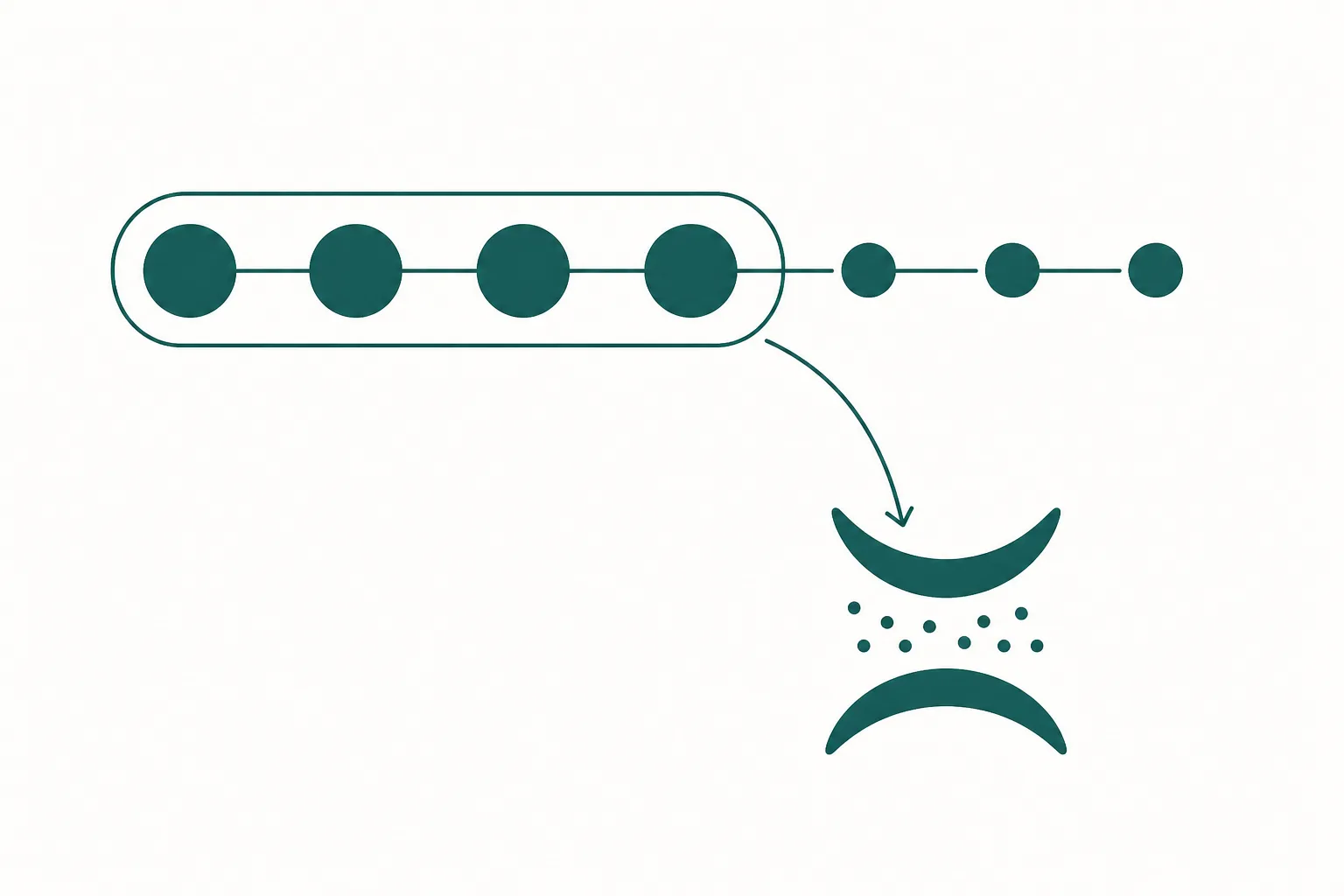
The neurotrophic strand rests on brain-derived neurotrophic factor. Intranasal Selank was reported to raise BDNF messenger RNA and protein in rat hippocampus, the protein increase measured twenty-four hours after administration 8. A later rat study reported that Selank prevented ethanol-induced memory and attention disturbances while regulating BDNF content in hippocampus and prefrontal cortex 9. BDNF is a plausible node for an anxiolytic effect, being implicated in synaptic plasticity and modulated by several established psychotropic classes. It is also a very commonly measured readout, which cuts the other way: a compound that moves BDNF has joined a large club, and membership is weak evidence for any specific clinical effect.
| Proposed mechanism | Evidence type | Model system | Status |
|---|---|---|---|
| GABAergic modulation via gene expression | Expression profiling after dosing | Rat frontal cortex; human neuroblastoma line | Inferred, not demonstrated |
| Allosteric effect on GABA-A function | Inference from expression and behaviour | Rodent and cell culture | Hypothesis |
| Potentiation of a benzodiazepine | Controlled behavioural experiment | Rats, elevated plus maze under mild stress | Reported in one model |
| Altered monoamine turnover | Neurochemical tissue measurement | Mouse brain regions; rat brainstem | Reported; strain-dependent |
| Increased neurotrophic factor | Transcript and protein measurement | Rat hippocampus and prefrontal cortex | Reported; unreplicated abroad |
| Anxiolysis without sedation | Active-comparator clinical study | Adults with anxiety disorder or neurasthenia | Reported; unreplicated abroad |
The human evidence
The central human study enrolled patients with generalised anxiety disorder and neurasthenia and compared Selank against medazepam, a benzodiazepine, as an active comparator 2. The reported outcome is a similar anxiolytic effect between the two, with additional antiasthenic and psychostimulant effects attributed to the peptide, alongside biochemical measurements relating to enkephalin degradation. An active-comparator design is a real design, more informative than an uncontrolled series, and a benzodiazepine comparator sets a meaningful bar.
What cannot be determined from the internationally indexed record is how that study was conducted, in the detail a reader would need. The English abstract does not report randomisation procedure, allocation concealment, blinding, or handling of dropouts; the full text is in Russian in a journal with limited international circulation; the sample is modest. The absence of those details from the indexed record is not evidence they were absent from the study. It is evidence they are not visible from outside. Those are different statements, and the difference is the whole point.
A compound reaching national registration has also passed a regulatory review that saw a dossier no outside reader has seen. That dossier is not in the published literature and is not something anyone outside the process can weigh. But its existence means the published record is a partial view of what was assessed, and treating that record as the totality would overstate a negative judgement.
Why this literature is hard to assess
The obstacles to appraising this literature are of several distinct kinds, and conflating them produces bad conclusions in both directions. Some are structural features of how the research was produced. Others are artefacts of how it reaches an English-language reader. Only the first kind says anything about quality.
- Authorship is concentrated. Most primary reports share investigators and institutional affiliation, principally the Institute of Molecular Genetics and associated pharmacological institutes. The findings did not arise independently and converge.
- Independent replication outside Russia is limited — a statement about what appears in the indexed literature, not a record of failed replication attempts.
- Much of the primary work is published in Russian, in journals whose full texts are not widely available internationally, and indexing is uneven. What reaches most readers is a translated title and a short abstract — which makes absence of evidence hard to distinguish from absence of indexing.
- Reporting conventions differ from contemporary international norms: randomisation and blinding procedures, confidence intervals, pre-specified endpoints and trial registration are often not described in the material available abroad.
- Sample sizes are generally small, power calculations are not typically presented, and because the same programmes report across several related peptides and many endpoints, the number of comparisons is not recoverable.
The first two items are substantive: concentrated authorship and absent replication limit how much confidence any finding can carry, and would do so in any language. The middle items are not. A literature that is hard to read from outside is not thereby a poor literature, and a reader who treats inaccessibility as a proxy for low quality is making a claim about the research from evidence that concerns only their own access to it. That error is common, and it is not a conservative one — it dresses an unexamined assumption in the language of scepticism.
The honest position is therefore narrower than either enthusiasm or dismissal. On the internationally indexed record, the mechanistic claims are reported but not established, the human evidence is real but not appraisable to contemporary standards from outside, and whether the compound does what is claimed cannot be settled from that record. Nothing here shows it is inert. Nothing here shows it works.
What would change the assessment
The gaps are specific, which makes them addressable. This is a testable proposition that has largely been tested in one place.
- Target identification: a binding site, a receptor subtype, or a demonstrated allosteric effect on channel function, with the behavioural effect abolished when that interaction is blocked.
- Independent replication of the expression work by a laboratory unconnected to the original programme, with full assay conditions reported.
- Pharmacokinetic characterisation adequate to the claims — plasma stability, central nervous system exposure, and evidence that the intact heptapeptide rather than a fragment reaches the brain.
- A randomised, blinded, placebo-controlled trial with a registered primary endpoint, reported to current international standards.
- Full-text translation and open indexing of the existing Russian-language literature, which would convert a genuine access problem into an ordinary appraisal problem.
The last is the cheapest and would resolve the most, because a large part of the present uncertainty is not about the biology at all.
The fair summary
Selank is a well-defined molecule with a coherent design rationale and a substantial literature behind it. Its proposed mechanism — indirect GABAergic modulation, with reported effects on monoamine turnover and neurotrophic factor expression — is plausible, internally consistent, and supported by expression, neurochemical and behavioural data in named model systems 368. It is not supported by the kind of evidence that establishes a drug mechanism, because that evidence has not been produced. The human data amount principally to one active-comparator study whose conduct cannot be assessed from what is available internationally 2.
That is a statement about what can currently be known, not a verdict on the compound. A body of research can be correct and inaccessible at once, and the right response to an inaccessible literature is to say so precisely rather than substitute a judgement the available evidence does not support.
References
- "Tuftsin": a natural phagocytosis stimulating peptide
- Efficacy and possible mechanisms of action of a new peptide anxiolytic selank in the therapy of generalized anxiety disorders and neurasthenia
- Selank Administration Affects the Expression of Some Genes Involved in GABAergic Neurotransmission
- GABA, Selank, and Olanzapine Affect the Expression of Genes Involved in GABAergic Neurotransmission in IMR-32 Cells
- Peptide Selank Enhances the Effect of Diazepam in Reducing Anxiety in Unpredictable Chronic Mild Stress Conditions in Rats
- Effects of heptapeptide selank on the content of monoamines and their metabolites in the brain of BALB/C and C57Bl/6 mice: a comparative study
- Comparison of the effects of selank and tuftsin on the metabolism of serotonin in the brain of rats pretreated with PCPA
- Intranasal administration of the peptide Selank regulates BDNF expression in the rat hippocampus in vivo
- Selank, Peptide Analogue of Tuftsin, Protects Against Ethanol-Induced Memory Impairment by Regulating of BDNF Content in the Hippocampus and Prefrontal Cortex in Rats